
well.
Maybe it is being the friend everyone texts before a wedding, graduation, or big night out. The one who loves doing makeup, braiding hair, or helping someone choose the perfect nail color.
At some point, many people start to wonder whether this could be more than just something they are good at.
Then comes the next question: what do you actually learn in beauty school?
There is a lot more to it than most people expect.
Beauty school is not just about haircuts, makeup, or nail polish. It is about learning how to work with real clients, build confidence in your skills, understand the science behind what you do, and figure out which part of the beauty world fits you best.
Some people love the fast pace and variety of hair. Some are drawn to skincare because they like the science behind ingredients and treatments. Others love the precision and creativity that comes with nails.
Here is what a real beauty school curriculum can look like.
You Learn the Basics First
Before anyone starts advanced color formulas, detailed nail art, or chemical peels, there is a foundation.
In beauty school, you usually start with the basics:
- Sanitation and safety
- Professional tools and equipment
- Client communication
- Basic anatomy and skin structure
- Time management and organization
These may not sound like the most exciting parts at first, but they are the skills that make everything else possible.
Before you can confidently perform a facial, you need to understand sanitation, skin types, and how different products interact with the skin. Before you can create a hair color formula, you need to know how to safely mix and apply products.
That foundation matters because beauty school is not just about teaching you what to do. It is teaching you why you are doing it.
You Learn Hair Services and Styling Techniques
If you are interested in a broad beauty education, Nuvani’s Cosmetology Operator program is where many students start.
This type of program covers a wide range of services, including:
- Hair cutting and shaping
- Blowouts and styling
- Shampooing and conditioning
- Hair coloring, highlights, and lowlights
- Chemical texturizing, perms, and relaxers
- Braiding, updos, and special occasion styling
- Scalp treatments and basic hair analysis
You also learn how to work with professional shears, clippers, razors, brushes, blow dryers, curling irons, flat irons, and color tools.
This path often appeals to people who like variety and do not want every day to look the same. One appointment might be a haircut, the next a balayage, and the next styling someone for a wedding, graduation, or other special event.
There is also a creative side to it. You are not just recreating a photo from Pinterest. You are learning how to assess someone’s hair type, face shape, routine, and goals, and then create something that works for them.
At first, these techniques can feel a little awkward. Learning how to hold shears properly, section hair evenly, or keep a blowout smooth takes practice.
Then, almost without noticing it, things start to click.
One day, you are second-guessing every angle of a haircut. A few weeks later, you are moving through a blowout without having to think through every step.
That is one of the biggest things students learn in beauty school: confidence comes from repetition.
If you are curious about how long the broader cosmetology path takes, you can also read How Long Is Cosmetology School? Your Complete Timeline to Licensing.
Beauty careers also continue to grow. Employment for barbers, hairstylists, and cosmetologists is projected to grow 5% from 2024 to 2034, which is faster than average for all occupations.¹
You Learn Skincare, Facials, and Makeup
Not everyone who goes to beauty school wants to focus on hair.
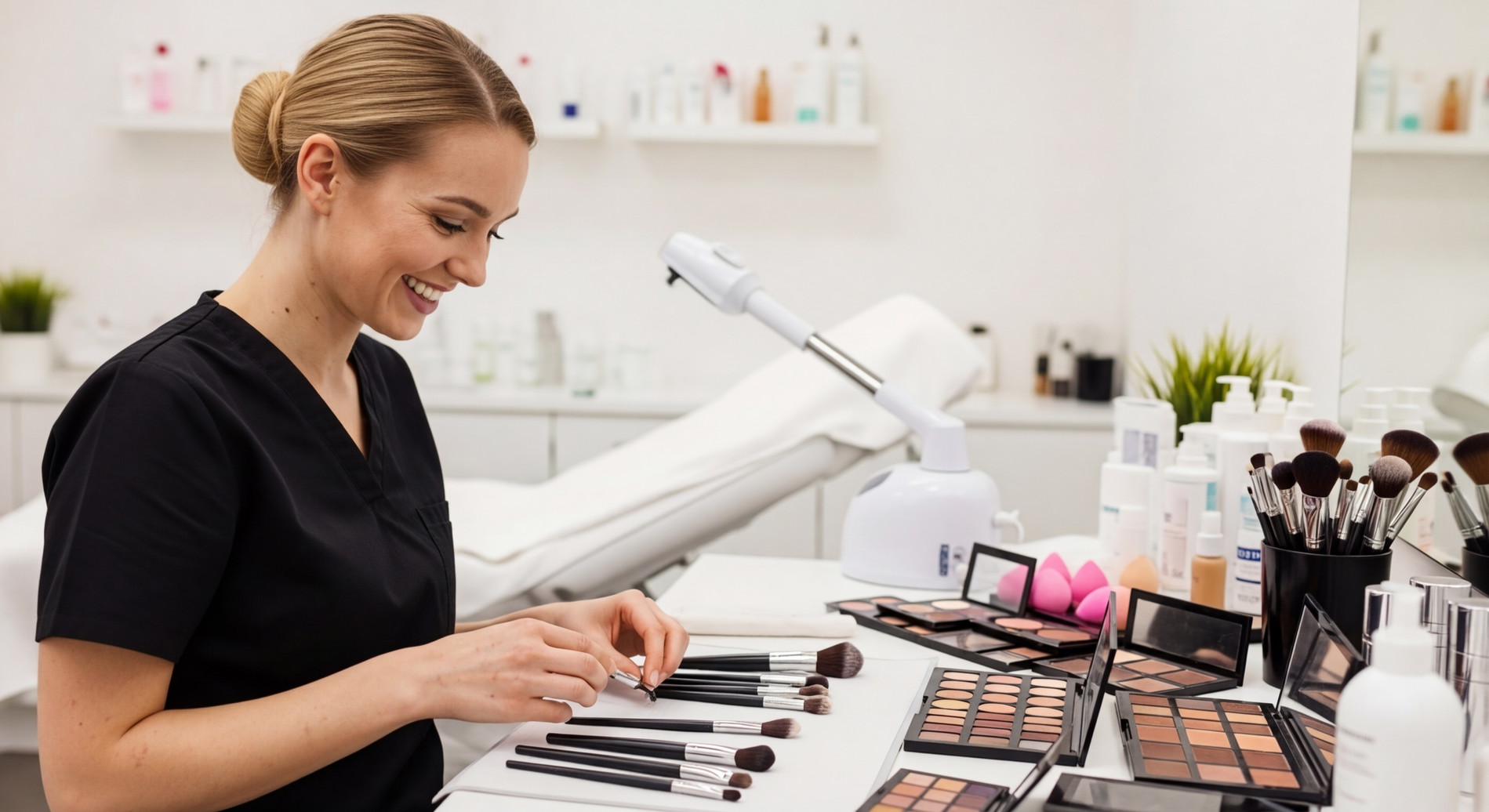
Some students are much more interested in skincare, facials, makeup, and helping people feel more confident in their skin. That is where Nuvani’s Cosmetology Esthetician program comes in.
In esthetics training, students typically learn:
- Facials and skin treatments
- Hair removal techniques
- Makeup application
- Skin analysis
- Skin anatomy and physiology
- Product knowledge and ingredient basics
- Sanitation and safety practices
You may learn how to identify dry, oily, combination, or sensitive skin. You may learn how to recommend products based on skin concerns or how to safely perform facial treatments step by step.
This path often appeals to people who like both creativity and science. There is a lot of hands-on work, but there is also a lot of problem-solving and attention to detail.
There is also a lot of communication involved. A facial is not just a treatment. It is a conversation. Clients want to know what products to use, what will help their skin, and what to expect.
Learning how to explain all of that clearly is part of the training, too.
You Learn Nails, Manicures, and Pedicures
For students who are drawn to nail art, manicures, pedicures, and nail enhancements, beauty school can look a little different.
Nuvani’s Manicure Specialist program focuses on nail services and hand and foot care.
Training usually includes:
- Manicures and pedicures
- Nail shaping and polish application
- Artificial nails and nail enhancements
- Nail chemistry
- Hand and foot massage
- Nail art and design
- Sanitation and tool safety
This path often appeals to people who love detail-oriented work. If you are someone who notices tiny imperfections, enjoys precision, or likes creating intricate designs, this can be a really satisfying area of beauty school.
At first, something as simple as polishing evenly can take a lot of concentration. Learning how much pressure to use, how to shape nails consistently, and how to work neatly takes time.
Eventually, though, those things become second nature.
You stop focusing on every little step and start paying more attention to the client in front of you.
You Learn How to Work With Real Clients
One of the biggest differences between beauty school and watching tutorials online is that beauty school puts you in front of real people.
At some point, you move beyond mannequins and classroom practice.
You start working with clients.
That is where everything starts to come together.
You learn how to:
- Ask the right questions during consultations
- Understand what clients actually want
- Handle nerves and mistakes
- Stay calm when things do not go perfectly
- Adjust your timing and communication
This is often the part students remember most because it feels the closest to the real job.
You start to realize that beauty work is not only about technical skill. It is also about making people feel comfortable, heard, and cared for.
You Learn Business, Customer Service, and Salon Operations
Beauty school is not just about services. It is also about understanding how the industry works.
In programs like Nuvani’s Cosmetology Operator program, students often learn:
- Salon business basics
- Public relations and customer service
- Retailing products
- Scheduling appointments
- Building client loyalty
- Professionalism in the workplace
This part matters because many beauty professionals eventually want flexibility.
Some work in salons long-term. Others move into private suites, freelance work, weddings, events, or even working for yourself.
Learning how to talk to clients, reschedule appointments, and create a good experience can make a huge difference over time.
If you are the kind of person who likes the idea of eventually working for yourself, this part of beauty school can be just as exciting as the hands-on work.
Beauty school can also be a strong option for career changers who want a more creative, people-focused path.
You Learn How to Stay Safe and Professional
There are certain things every beauty student learns, no matter what program they choose.
Sanitation is one of the biggest.
Whether you are working with skincare tools, nail files, or hair color, you need to know how to keep your station clean and your clients safe.
Beauty school teaches you:
- Proper cleaning and disinfecting
- How to handle products safely
- When to wear gloves
- How to avoid cross-contamination
- State board safety requirements
These skills are not flashy, but they are essential.
They are also a big part of what helps students feel prepared for licensing exams and real-world work environments.
So, What Do You Actually Learn in Beauty School?
The short answer is: a lot.
You learn practical skills. You learn how to communicate. You learn how to work with people. You learn how to handle tools, products, schedules, sanitation, and expectations.
You also learn how to trust yourself.
At the beginning, most students feel nervous. Everything is new. The tools feel unfamiliar. Even simple tasks can take longer than expected.
But that changes. Little by little, things start to click.
You get faster. More comfortable. More confident.
And eventually, what once felt intimidating starts to feel normal.
Taking the First Step
If you have been wondering what you learn in beauty school, the real answer depends on what interests you most.
Some students are drawn to hair and want a broader education through Nuvani’s Cosmetology Operator program. Others are more interested in skincare and facials through Nuvani’s Cosmetology Esthetician program. Some know right away that they want to focus on nails through Nuvani’s Manicure Specialist program.
No matter which path you choose, beauty school is really about learning how to turn something you enjoy into something you can build a future around.
Footnotes
*Program length when completed in normal time